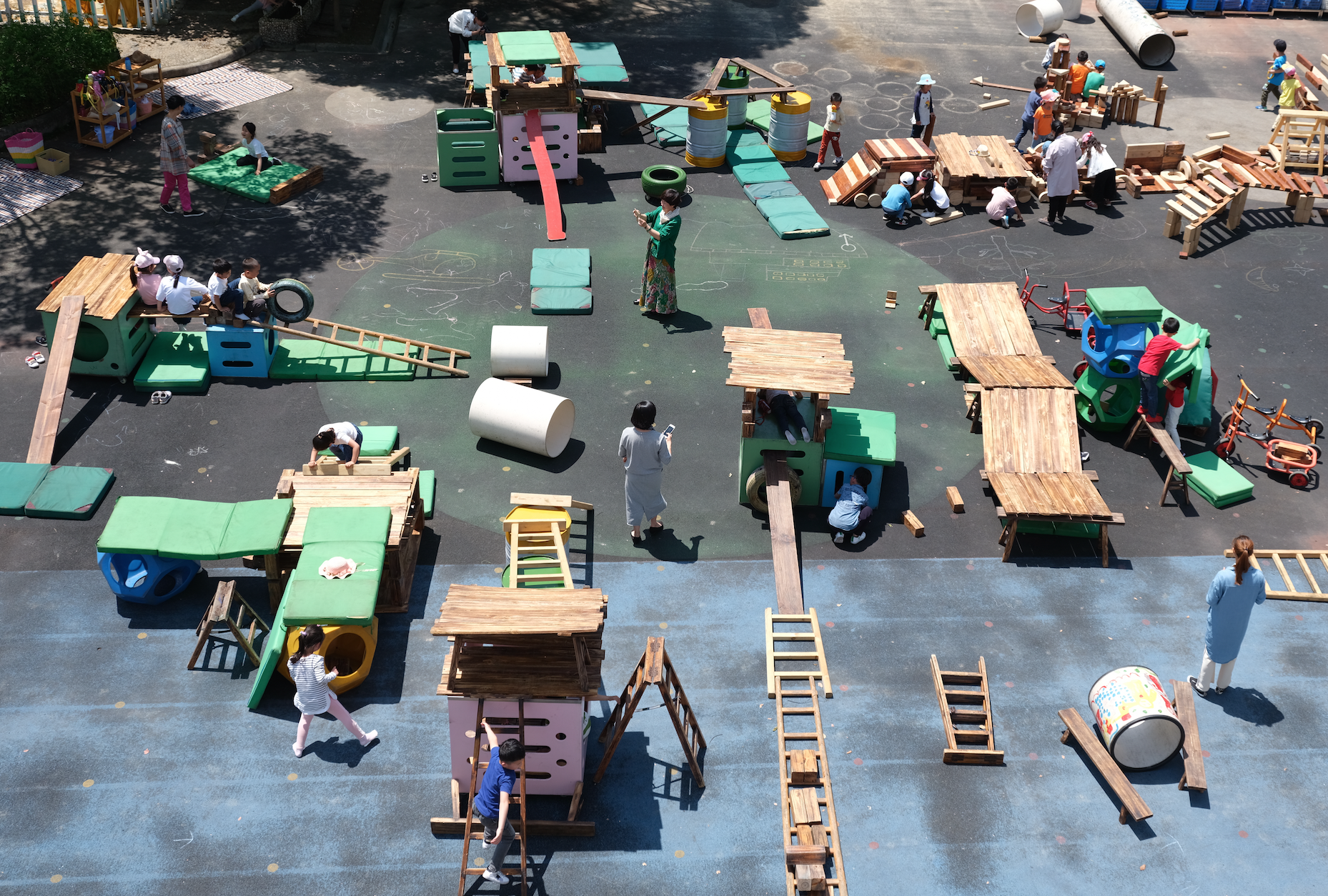
A Guide to Anji Play
“All of us experience a unique and important period in our lives that we call childhood when we have an innate urge to understand the world, ourselves, and others. Our brains are ready and set to solve and understand the new problems and relationships and qualities that we encounter in our experience.
For that reason, what we describe as true play—play that is self-determined in an environment of love—is actually the deepest and most natural form of learning. Nothing could be more important to the lives of children than the joy, freedom, and growth that characterizes this kind of play.”
— Cheng Xueqin, Anji Play founder
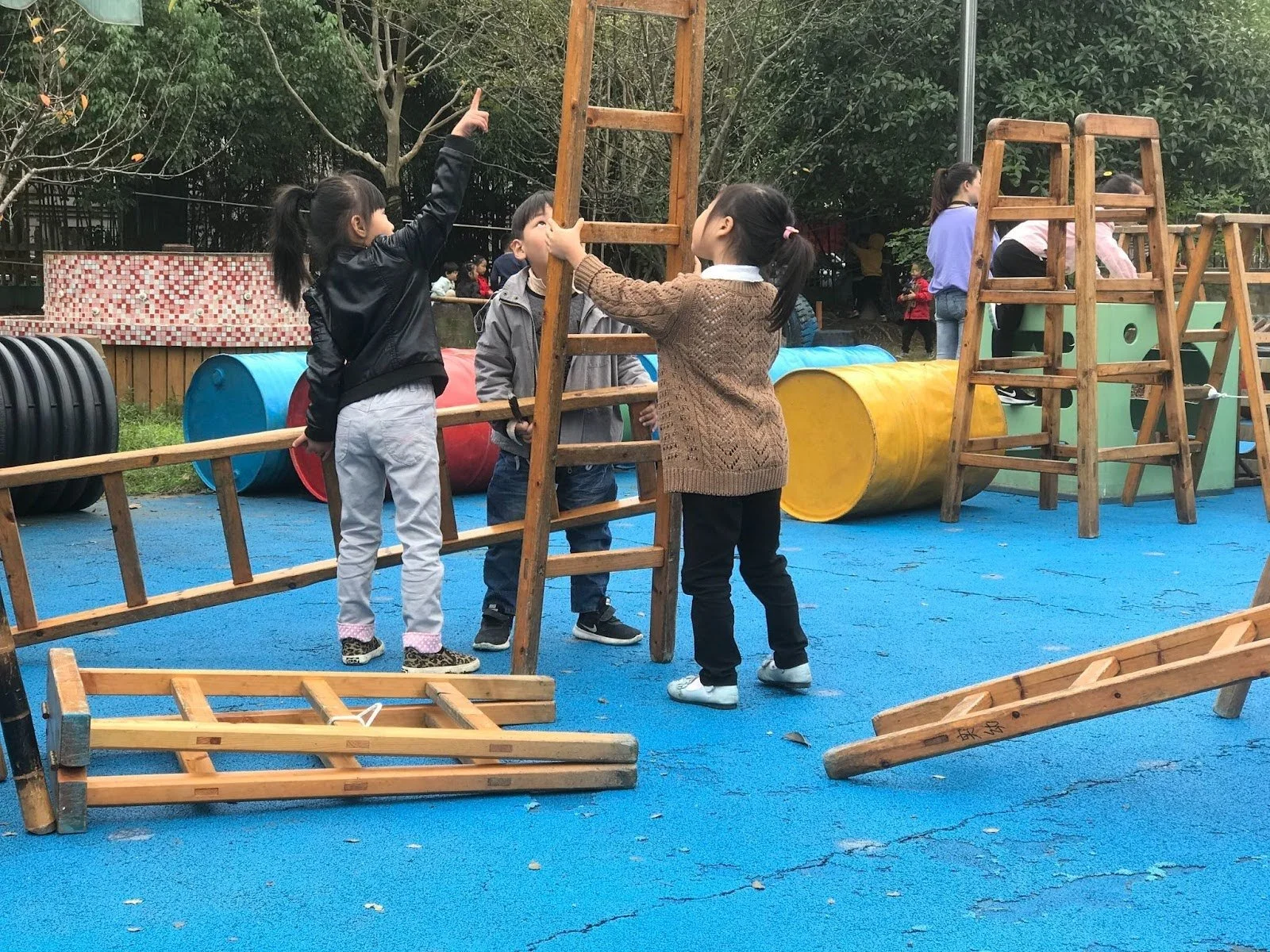
Children in Anji Play have access to large, minimally- structured and open-ended environments and materials, and extensive and uninterrupted time to work together and solve problems.
What is Anji Play?
Anji Play is a philosophy and approach to early education developed by Ms. Cheng Xueqin for the public early childhood programs of Anji County, Zhejiang Province, China. It is the comprehensive, full-day curriculum of 130 public schools in Anji, serving 14,000 children ages 3-6. Anji Play has pilot and demonstration programs in every county in Zhejiang Province and every province in China, currently reaching over 3 million children in the country. The approach is also the basis for partner programs and professional development around the world.
Anji Play is different from many other approaches to early education because it treats the child’s open-ended, self-determined true play as the primary experience of learning, development, and growth. True play takes place when the child follows their own interest and intentions in play. It is deep and uninterrupted engagement in the activity of one’s own choice.
The approach values and protects the joys of a healthy, natural childhood in the 21st Century, and uses technology in the classroom in a way that supports children’s active engagement in their own learning.
As Ms. Cheng and her core team of principals and teachers first sought to understand the child's authentic experience of play, they began by stepping back. The first steps they took, the first steps that any adult should take when seeking to create the conditions for true play, were "mouth shut, hands down, ears, eyes, and heart open to discover the child." This shift in our stance is the first step to recalibrating our relationship to the child’s learning.
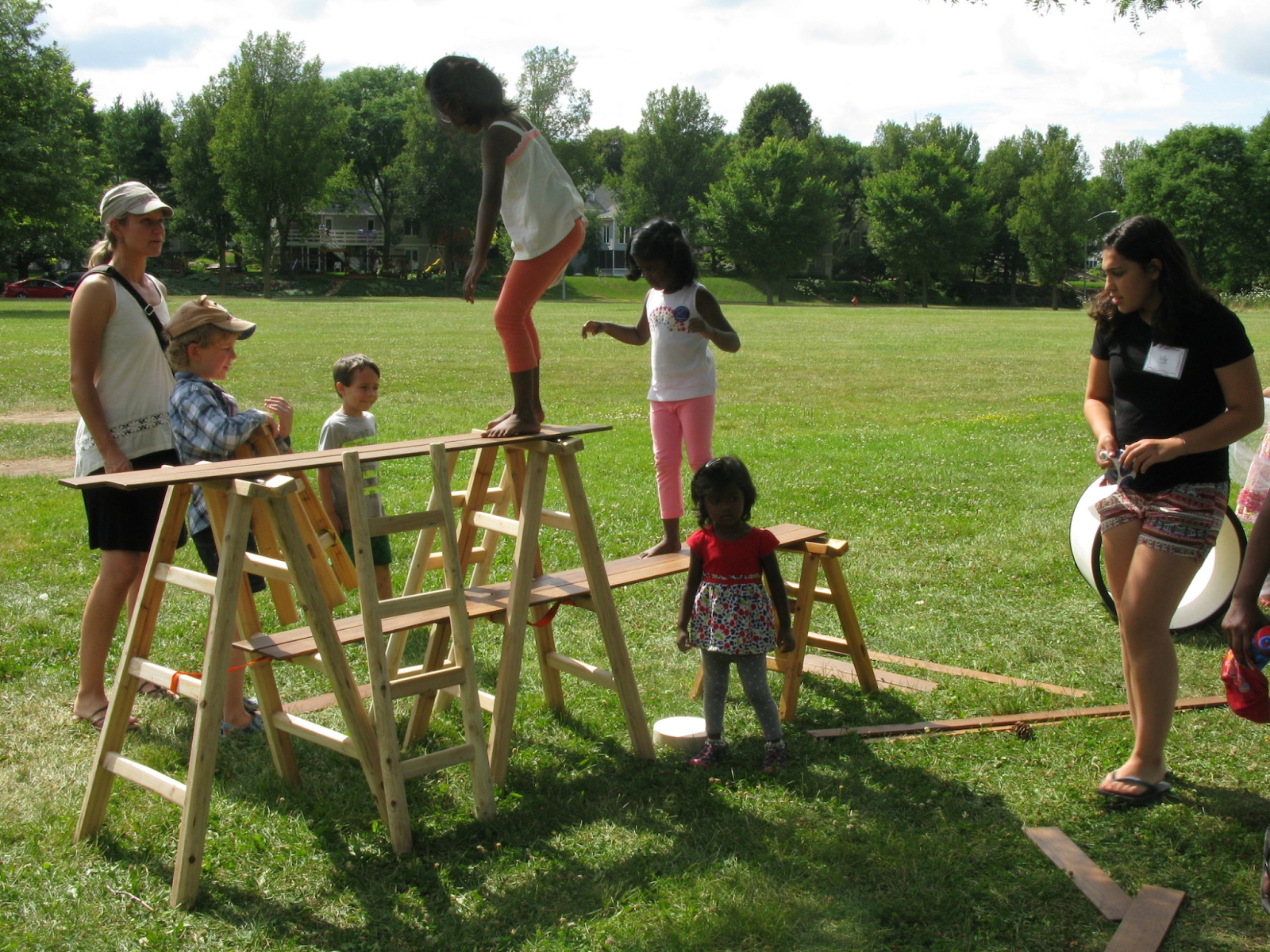
Parents support their children's experience of true play at an Anji Play partner program by the Madison Public Library in Wisconsin, USA.
What is the Anji Play philosophy?
The Anji Play approach is based on a philosophy that an environment of love (one that provides trust, warmth, support, and safety) allows children to take developmentally appropriate risks. These risks (physical, emotional and intellectual) provide children with experiences of joy. This joy leads to the child’s deep engagement in their own learning and inquiry. The child’s daily reflection on these experiences creates lasting knowledge and builds the foundation for and an interest in future learning.
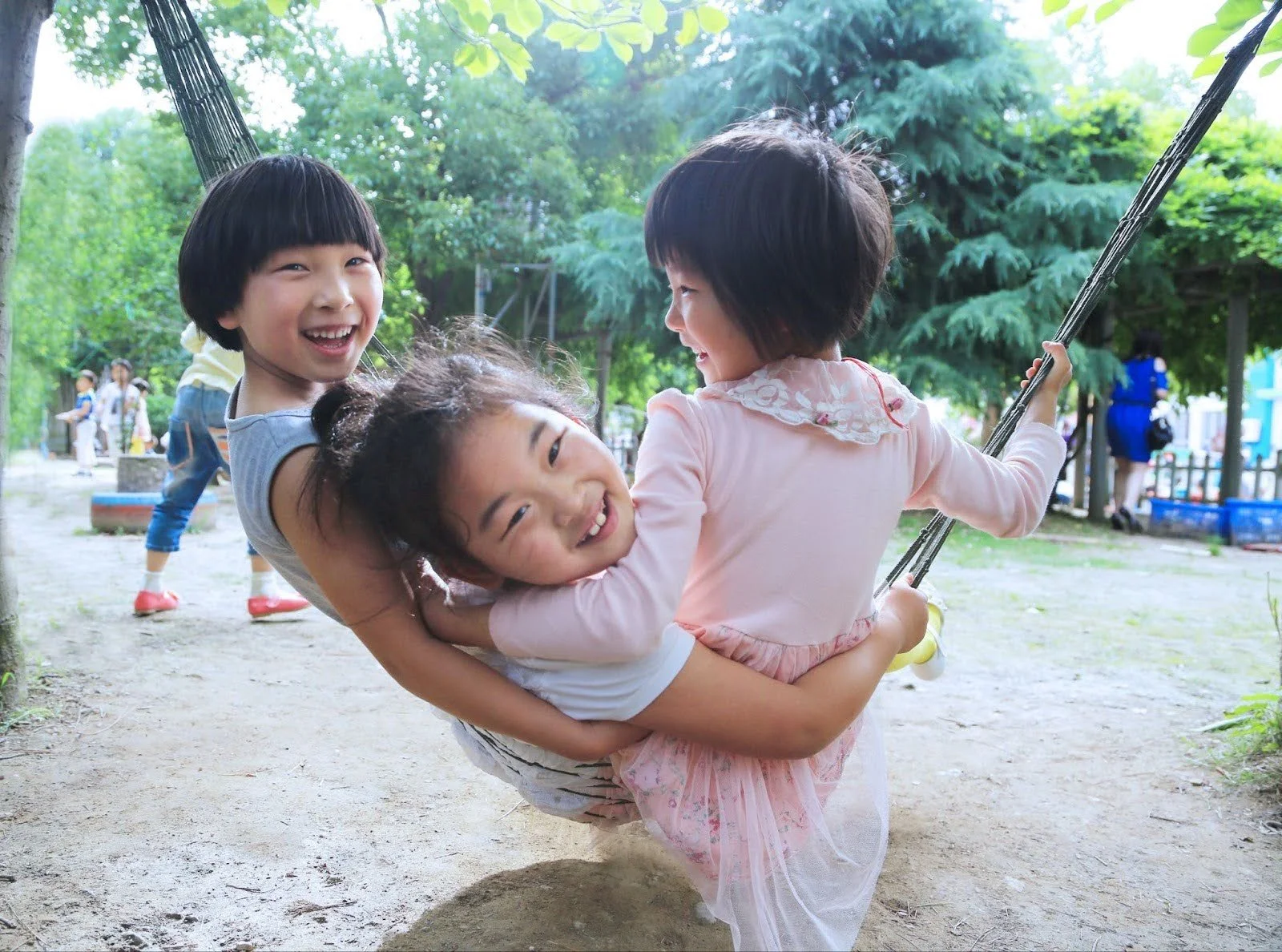
Love is the foundational value of Anji Play.
“I have seen the future of early childhood education and it is Anji Play. Phenomenal learning takes place in Anji—cognitive, social, emotional, creative, scientific—because pressure and conflict have been replaced by love and support.
We have known a long time that children learn best when they are fully engaged with their teachers, their peers, and their environment. They learn best when they feel joy rather than fear or boredom. All of these things are evident in every aspect of Anji Play, all day long, to a degree I have not seen anywhere else.”
— Dr. Lawrence J. Cohen, author of Playful Parenting
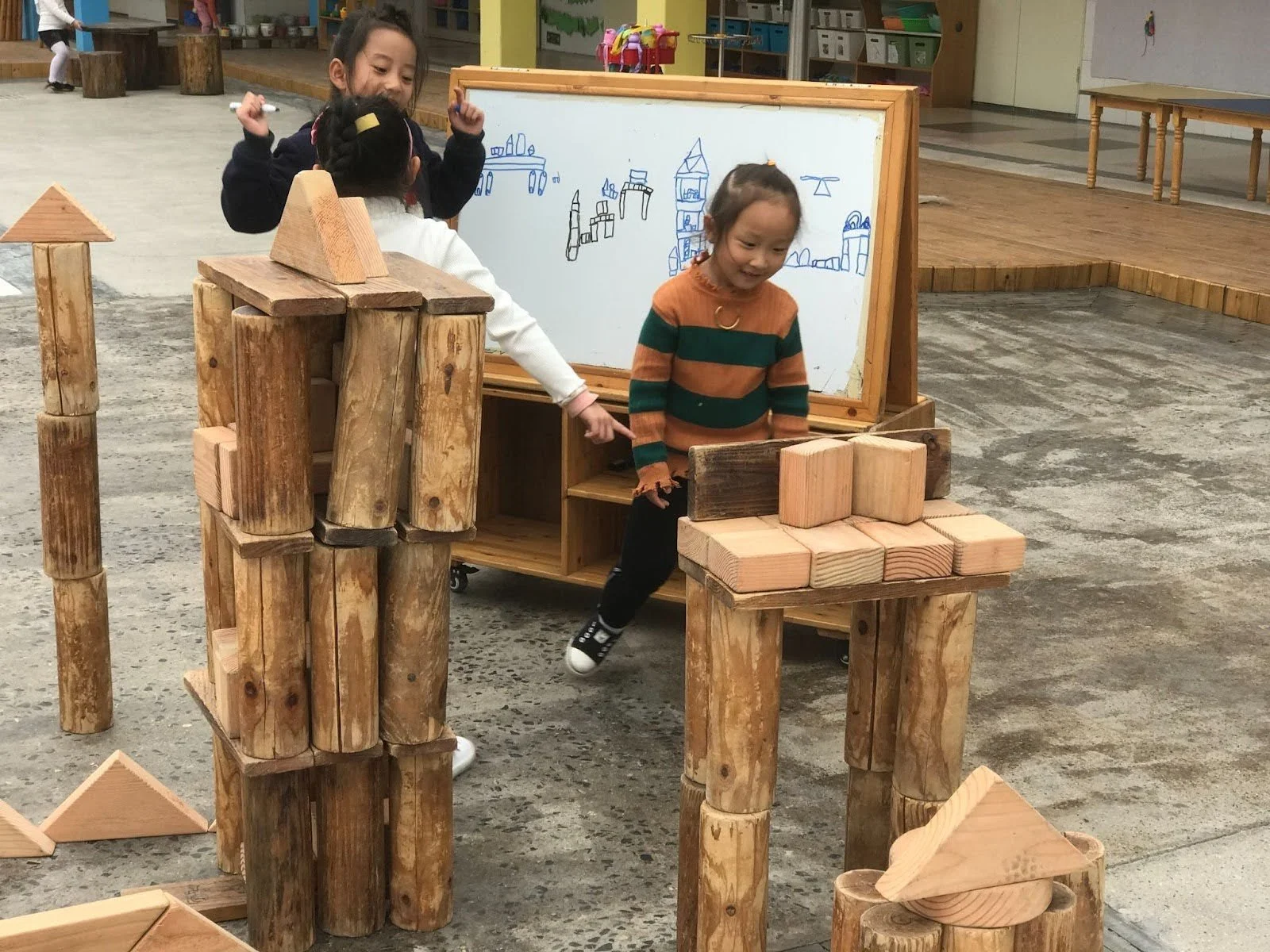
After self-selecting groups, children have access to materials that allow them to plan their block play.
What do children do in an Anji Play program?
The child's primary daily experience is open-ended, self-determined true play. This play takes place both indoors and outdoors, and is structured by materials, environments, routines, and teacher practices.
Children in Anji Play programs also reflect on their experiences daily by creating drawings of their play called “Play Stories,” and engaging in group discussions and reflections centered on photos and videos of their play called “Play Sharing.”
Play Stories and Play Sharing give children the opportunity to think and reflect about their play, and provide an opportunity for children to express their learning, views, and emotions. Through creating Play Stories and engaging in Play Sharing, children develop a strong metacognitive practice (“thinking about thinking”), critical thinking skills, process and organize their acquired knowledge of mathematical and scientific principles, as well build on their language and literacy abilities.
All classrooms in Anji Play programs have quiet spaces for reading filled with books, numerous smaller materials for indoor play, plants and small animals, notebooks for children to record natural phenomena and daily routines, and materials and spaces for art, including paint, clay, and collage.
Children in Anji Play programs are also encouraged to take the lead in developing self-sufficiency around activities like using the bathroom, washing and cleaning, changing clothes, eating, and other important aspects of daily life.
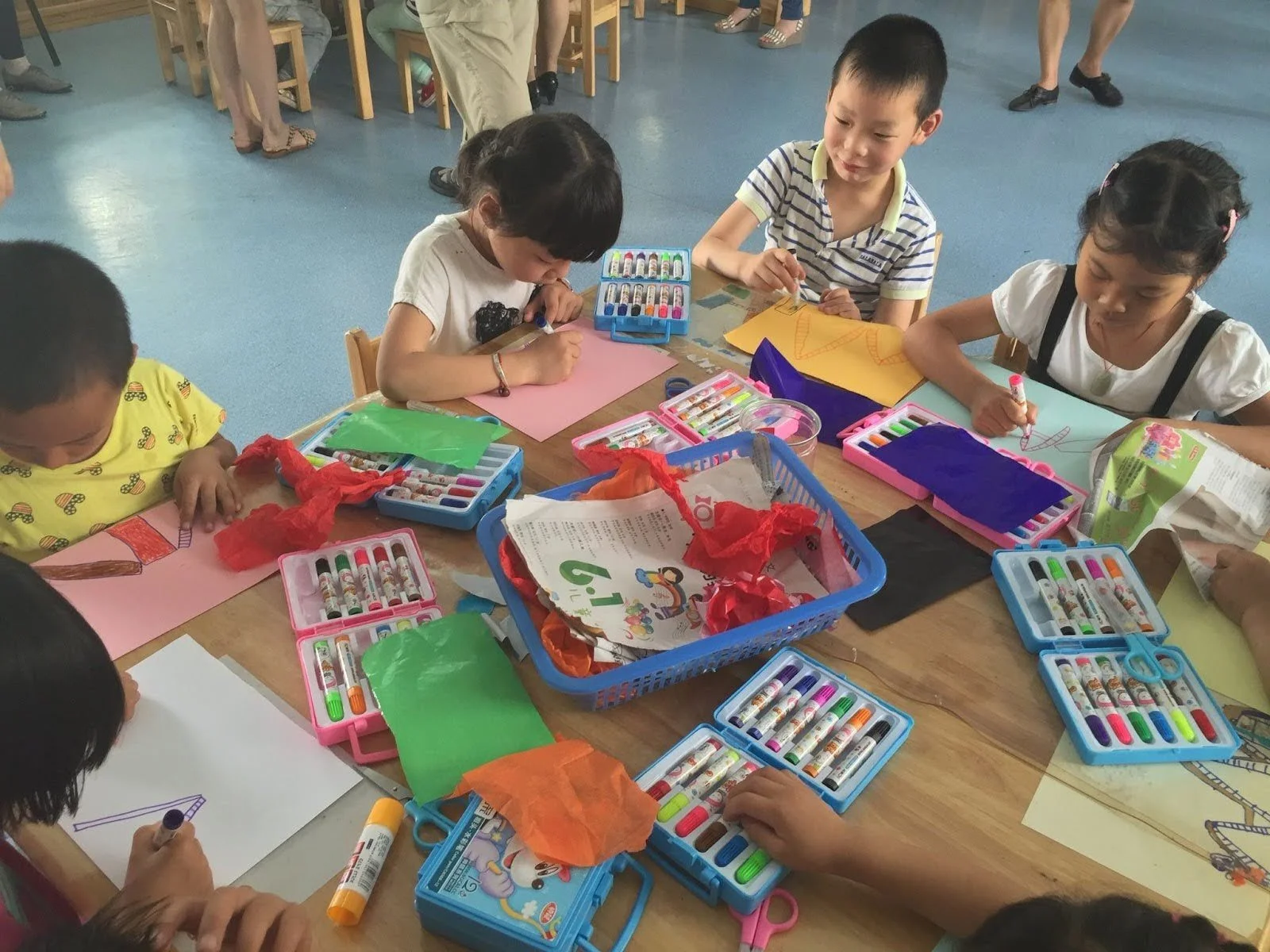
Children in Anji drawing and writing their Play Stories.
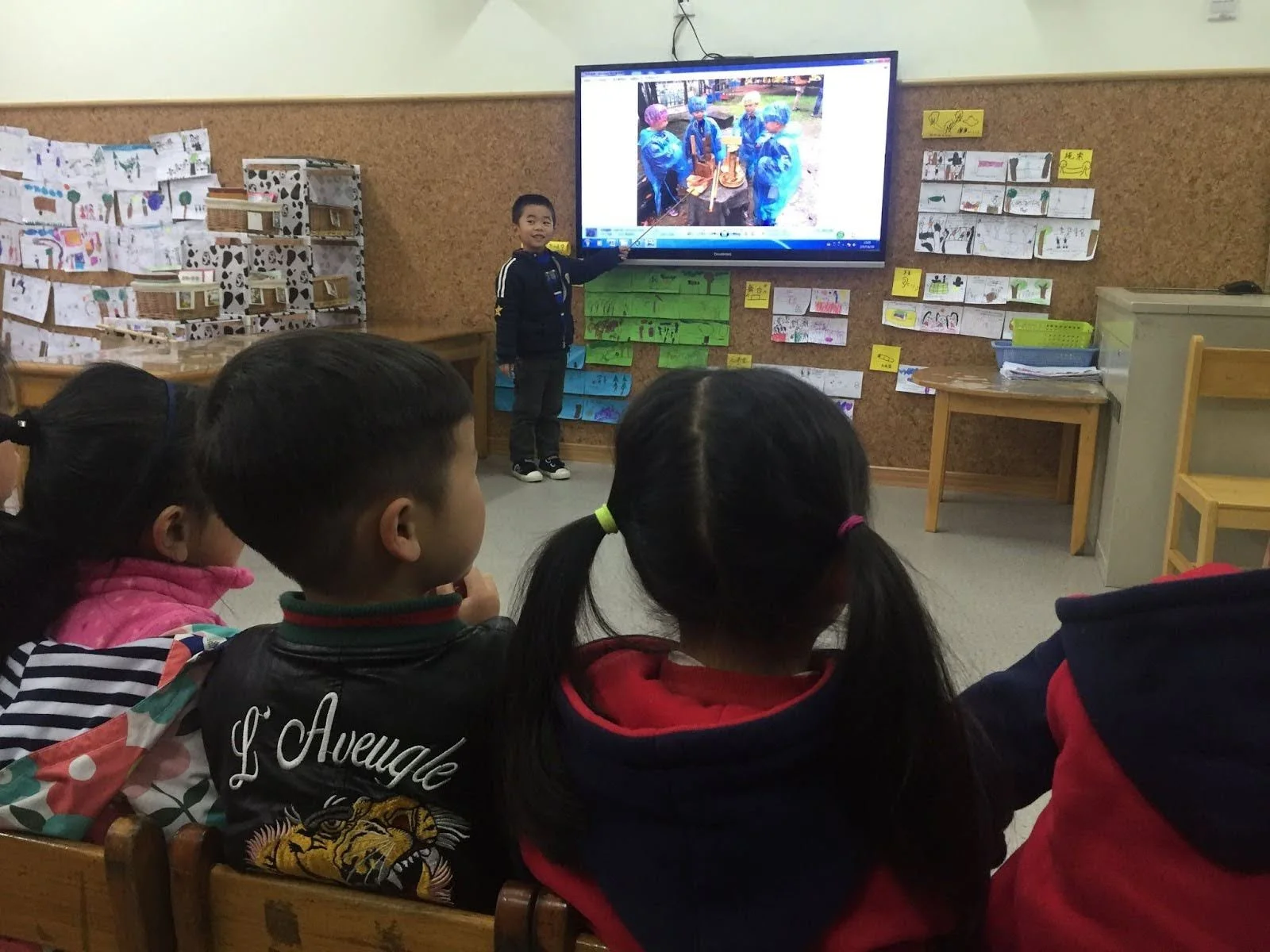
Teacher facilitated, child-led Play Sharing in Anji.
What do teachers do in Anji Play programs?
In Anji Play programs, teachers do not structure, guide or direct the activities or outcomes of the child’s experience during play. This means that you will not see Anji Play teachers actively lead a lesson or set out activities for the children.
You will see teachers encourage and support children who take risks, work with one another, find solutions, and go at their own pace.
You will see teachers provide emotional support for children and trust in the child’s capacities and abilities.
You will see teachers carefully and closely observe and record children’s actions, activities, interests, dilemmas, conflicts, experiments, and problem solving.
You will also see teachers facilitate opportunities for children to reflect on and explain their own experiences.
Above all else, teachers in Anji Play programs create the conditions for deep learning and safety through clear, consistent, and reasonable expectations and routines, and trust in the capacity of the child. The teacher views the discovery of the child’s own insights and understandings as their primary professional motivation.
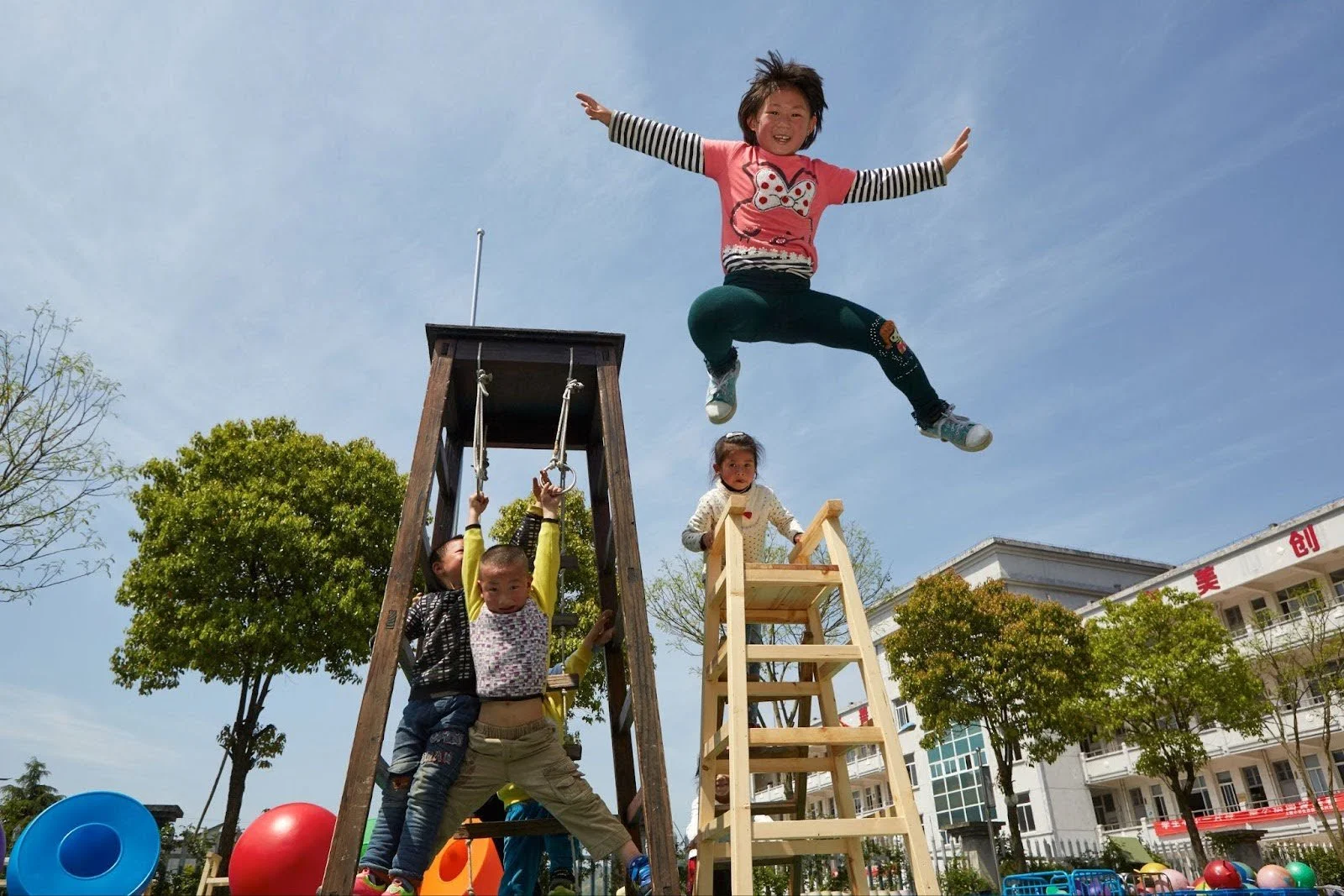
Self-selected risk provides significant health and safety benefits to children.
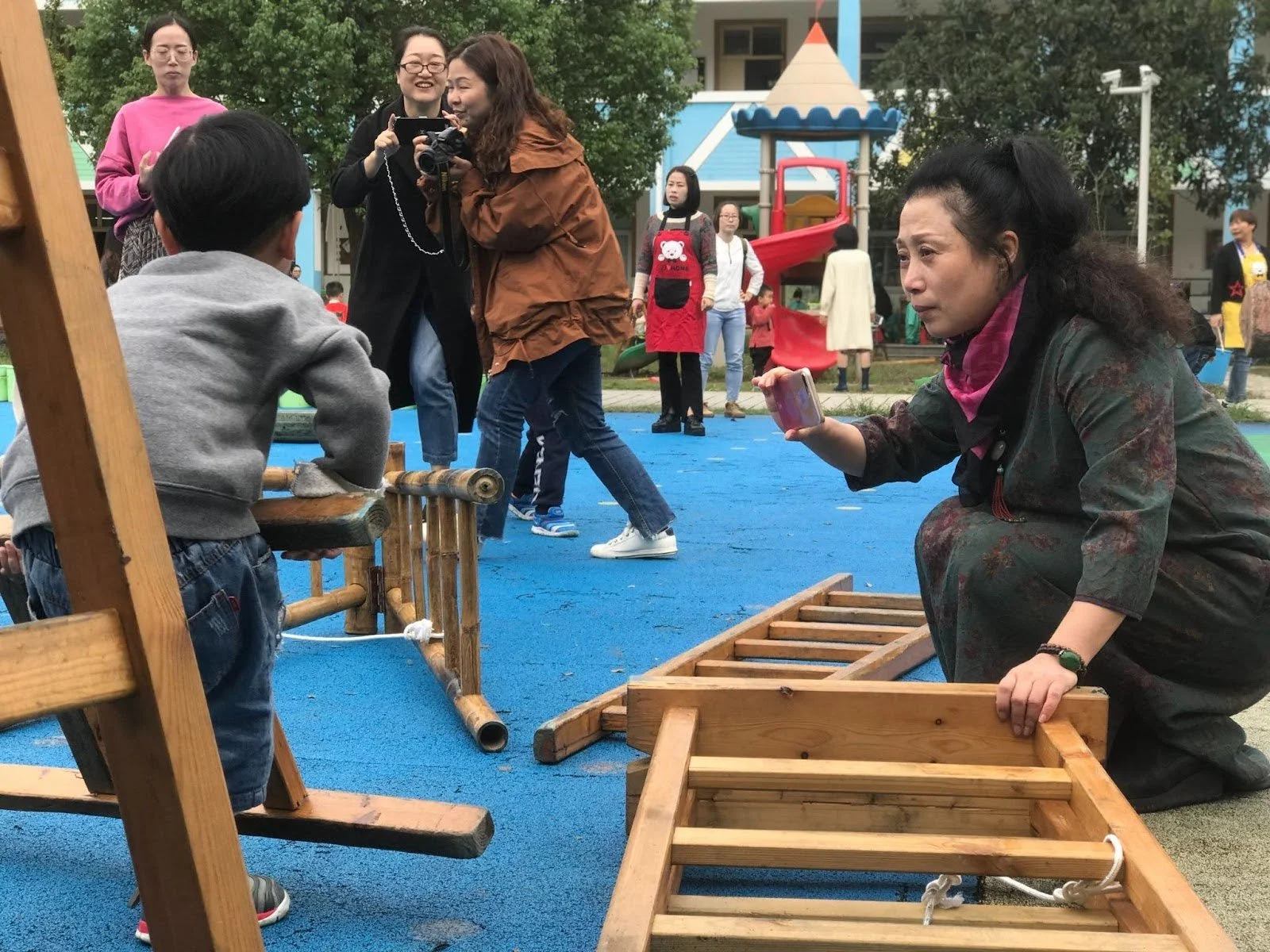
Anji Play founder Cheng Xueqin uses her smartphone to record play.
What is the role of technology in Anji Play programs?
Technology plays an important role in Anji Play programs. Every day, teachers observe their children engaged in play, and take photos and videos of that play on their smartphones. After play, teachers share those images and videos with their class on large monitors, and allow the children to lead a discussion about their experiences, insights, and problem solving.
Because the smartphone and the screen are tools for the teacher to understand the learning of the child and for the child to understand their own experience, children in Anji Play programs interact with technology in an active way, rather than in a passive way. In Anji Play programs, technology fulfills a role of respecting the active intelligence of the child, rather than functioning as a medium for the child’s passive engagement with content created by adults. In Anji Play programs, the child’s active experience of play is the most pedagogically important digital content.
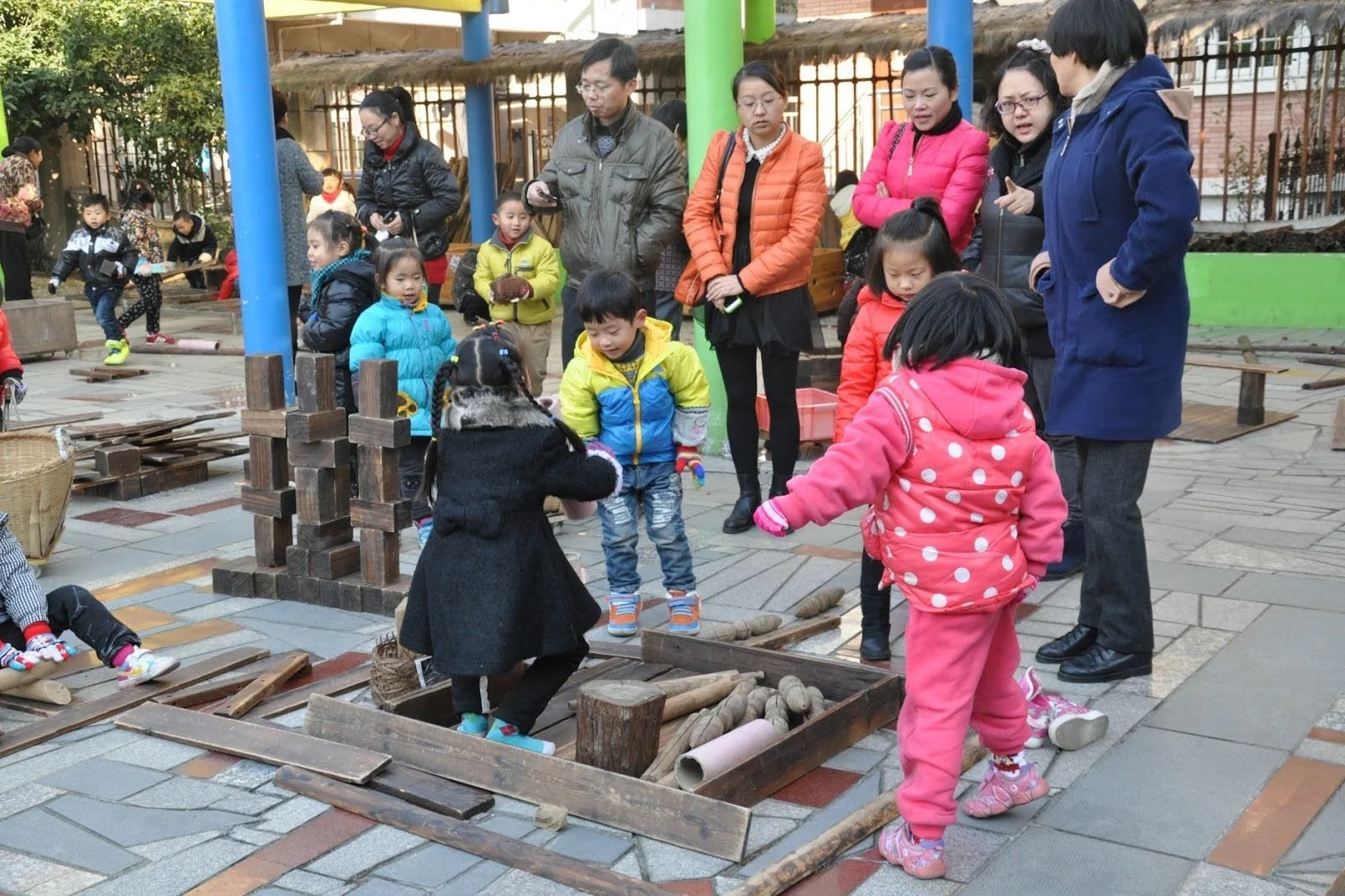
Parents in Anji County visit a school to observe and record their children engaged in true play.
“Laughter and joy pervade every school in Anji as children painted walls and rocks outside, worked together to create play environments and had the support of teachers who were onlookers- they 'put their hands down and stepped back' so that the play world belongs to the children. And belong to them it does!
Why is this exciting to see? Because the children are filled with confidence and trust, trust in themselves, in the adults and their peers. They have initiative and creativity, problem solving and collaboration, ideas and the carrying out of ideas. THIS is the basis of building caring, strong human beings.
And it is equally the base for learning. In every bit of play, they are learning- about themselves, others, math, science, language and literacy, thinking and getting along. It was simply amazing!”
— Dr. Tovah Klein, author of Raising Resilience